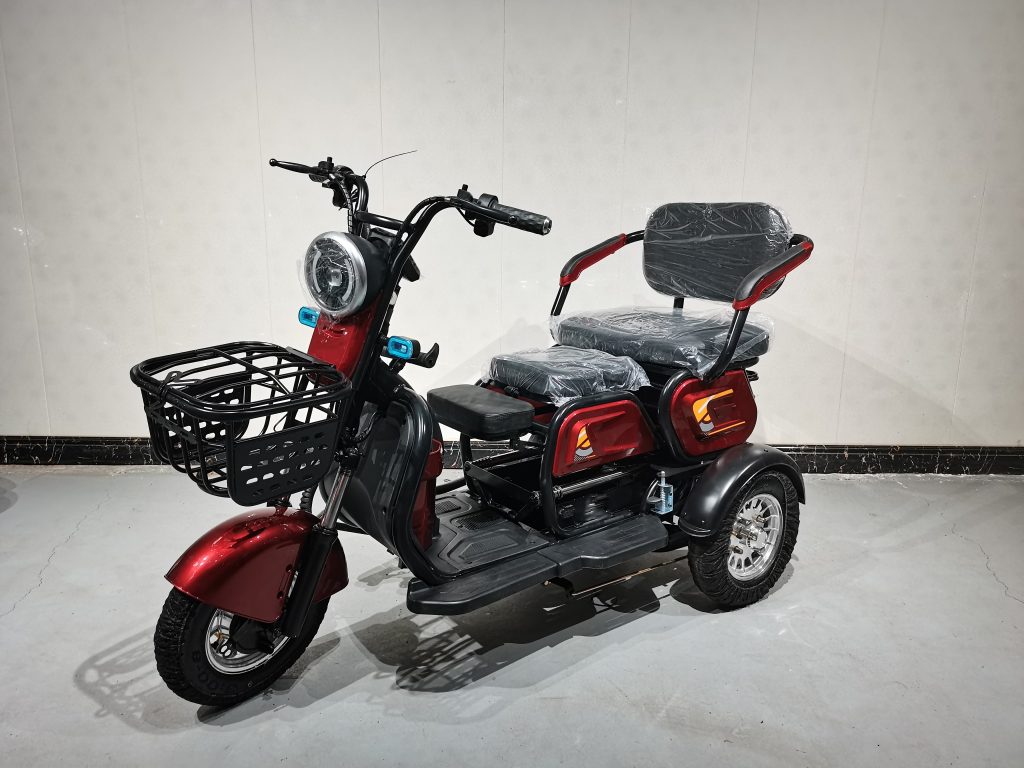
Electric tricycles are no longer a niche product—they are a mainstream solution for last-mile delivery, vending, and passenger transport. But with dozens of factories offering seemingly similar models, how do you choose the right one for your climate, cargo, and daily mileage?
As a direct electric tricycle manufacturer with over a decade of export experience, we break down the five most critical decisions every buyer must make before placing a bulk order.
1. Motor Type: Hub Motor vs. Differential Motor
| Feature | Hub Motor (Direct Drive) | Differential Motor (Axle Drive) |
|---|---|---|
| Best for | Flat urban roads | Hilly areas, heavy loads |
| Torque | Moderate | High |
| Repair cost | Lower (swap whole wheel) | Higher (needs gearbox expertise) |
| Gradeability | ~10–15° | ~20–25° |
| Our recommendation: If your routes include bridges, garbage dumps, or unpaved roads, choose a differential motor (500W–2000W). For flat courier routes, a hub motor is sufficient and cheaper. |
2. Battery Chemistry & Range Reality
Do not trust “theoretical range” numbers. Real-world range depends on load, temperature, and terrain.
- Lead-acid (GEL/AGM) : Lowest upfront cost, but heavy and short cycle life (300–500 cycles). OK for low daily use (<30 km/day).
- Lithium-ion (LiFePO4) : 3–4x more cycles (1500–2000), lighter, and performs better in cold (–10°C to 60°C). Higher initial cost but lower total cost of ownership after 12 months.
Tip: Ask for a battery certificate (CE, UN38.3). Also request a removable battery version if your users charge indoors.
3. Chassis and Suspension – The Hidden Differentiator
A cheap electric tricycle will crack at the steering head tube or axle mount within one year. Look for:
- Frame material : Q195 or Q235 steel tube, minimum wall thickness 2.0 mm for cargo models.
- Front suspension : Hydraulic shock absorbers (not just spring) for pothole-heavy roads.
- Rear axle : Full-floating axle with taper roller bearings – essential for loads above 400 kg.
Our factory uses robotic welding and 100% test frames at 150% rated load.
4. Braking System: Don’t Overlook Safety
For a loaded e-tricycle at 30 km/h, stopping distance must be <5 meters.
- ✅ Hydraulic disc brakes (front and rear) – Best for hilly or wet conditions.
- ✅ Mechanical drum brakes (rear only) – Acceptable for flat areas but needs frequent adjustment.
- ❌ Rod-pull “V-brakes” – Unsafe for any cargo tricycle over 200 kg.
Check: Does your supplier include a parking brake lever? This is often forgotten but crucial for street vendors on slopes.
5. Legal Classification in Your Target Market
One of the biggest import mistakes is ignoring local vehicle codes.
- EU: Most e-tricycles under 250W and 25 km/h are classified as “electric bicycle” (no license). Cargo versions over that fall into L2e category (requires lights, mirrors, type approval).
- USA: Varies by state – some treat it as “electric-assisted bicycle” (≤20 mph), others as “low-speed vehicle” (LSV).
- ASEAN/India: Often governed by motor vehicle acts – may need ARAI or DOT certification.
We offer models with EEC, COC, and DOT-compliant lighting kits ready for homologation.
6. Spare Parts & After-Sales Reality
Before signing a container order, ask for:
- A spare parts list with unit prices (controllers, brake pads, tubes, throttle twist grips).
- Lead time for emergency parts (2 weeks? 60 days?).
- Video repair guides – many African and Latin American mechanics prefer visual training.
Final Verdict: A Good E-Tricycle Is Not Just Cheap – It’s Reliable
The lowest priced model often costs more in downtime, repairs, and lost cargo value. A quality electric tricycle with a lifepo4 battery and hydraulic disc brakes may have a 30% higher upfront price, but it pays for itself within 8–12 months in fuel savings alone.
We manufacture electric tricycles tailored to your road conditions and business model – cargo, passenger, refrigerated, or garbage collection. Request a customized quotation with CAD drawing and BOM list.